
Seasonal allergies in dogs often show up differently than they do in people. Instead of mainly sneezing or having a runny nose, many dogs develop itchy skin, irritated paws, repeated licking or chewing, or discomfort after spending time outdoors.
Grass, pollen, weeds and other environmental allergens can collect on a dog’s paws and coat. For dogs that are sensitive to these outdoor triggers, reducing direct contact and cleaning the paws after walks may help limit exposure.
Important: Itchy paws are not always caused by allergies. Yeast, bacterial infections, parasites, injuries and other skin problems can cause similar symptoms. If your dog has persistent licking, redness, swelling, sores, bleeding, odor or significant discomfort, talk with your veterinarian.
Dogs with seasonal or environmental allergies may become more uncomfortable during certain times of year or after spending time in grass, weeds or other outdoor areas.
Dogs can react to environmental allergens associated with lawns and outdoor areas, including grass pollen, weeds and other plant allergens. Some dogs may also experience paw irritation after contact with treated lawns or other outdoor substances.
If your dog repeatedly licks or chews the paws after walking through grass, reducing direct contact may be useful while you work with your veterinarian to determine what is causing the irritation.
You may not be able to avoid grass, pollen and weeds completely, but a few simple habits can reduce how much outdoor material your dog carries back inside.
Dog boots do not treat allergies, but they can help reduce direct contact between the paws and grass, pollen, weeds and other outdoor irritants. For dogs whose paw licking becomes worse after walking outdoors, covering the paws can be one practical part of an allergen-reduction routine.
Remove the boots when your dog comes indoors and clean them as needed so outdoor pollen and debris are not carried through the house.

Best for: Warm weather, dry grass and lightweight paw coverage
Meshies are breathable dog boots that provide a lightweight barrier between the paws and grass, pollen and outdoor surfaces. They are a good choice for warm-weather walks when airflow and flexibility are important.

Best for: Durable protection on grass and mixed outdoor surfaces
All Weather Ultras provide more substantial paw coverage for dogs that spend time on lawns, sidewalks, trails and other outdoor surfaces. Their durable sole and secure straps make them a practical choice when more protection is needed.
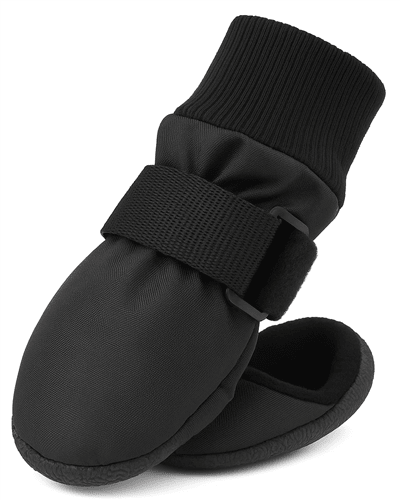
Best for: Wet grass, damp lawns and wetter outdoor walks
PolarPaws provide waterproof paw coverage with a soft, flexible feel. They can be a useful option when the grass is wet or when your dog needs a barrier from damp outdoor surfaces without a heavy rigid boot.
Compare breathable and protective boots that can help keep paws covered when walking through grass, pollen and other outdoor surfaces.
Shop Allergy Dog BootsAn AllDogBoots customer tried boots for her Saint Bernard, Karma, because Karma repeatedly licked her front paws and seemed especially uncomfortable after going outside. The customer believed grass or lawn treatments may have been contributing to the irritation and began putting boots on Karma before outdoor trips.
"Within 24 hours her paw licking was down by about 90%. She knows that she has to put her boots on every time she goes outside and waits patiently at the door."
This is one customer’s experience and does not mean boots will have the same effect for every dog. Boots can reduce direct paw contact with outdoor surfaces, but they do not diagnose or treat the underlying cause of allergies or itching.
Contact your veterinarian if your dog’s itching or paw licking is persistent, severe or getting worse. Redness, swelling, broken skin, bleeding, unusual odor, recurring ear problems or hair loss can also be signs that veterinary care is needed.
Your veterinarian can help determine whether the problem is related to environmental allergies or another cause and recommend appropriate treatment based on your dog’s symptoms.
Because many different conditions can cause paw licking and itching, the timing of the symptoms can be helpful information for your veterinarian. Note whether the problem becomes worse during a particular season, after walking through grass, after lawn treatments, or after visiting certain outdoor areas.
Protective boots may reduce exposure during walks, but ongoing symptoms still deserve veterinary evaluation so the underlying cause is not overlooked.

