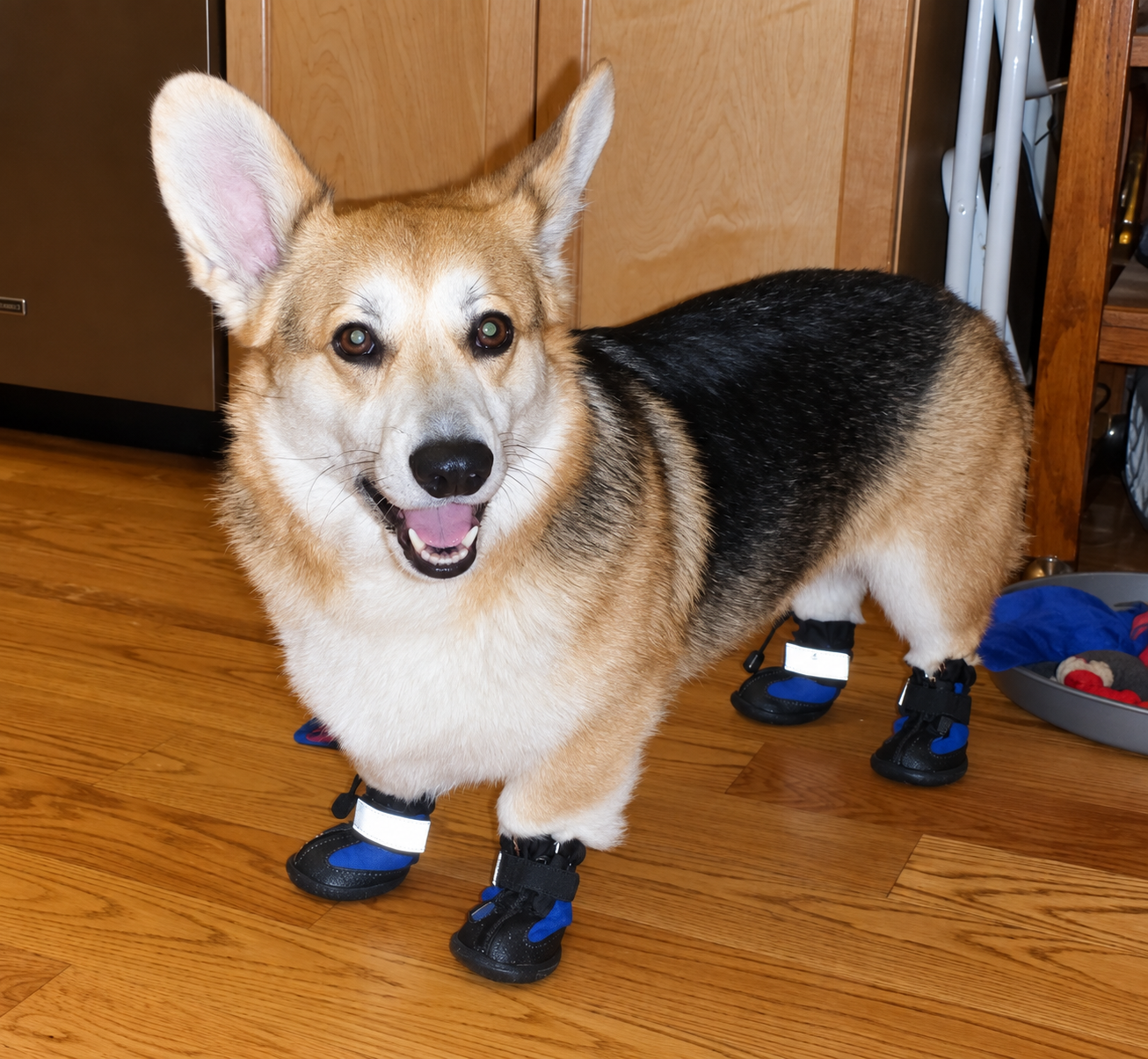
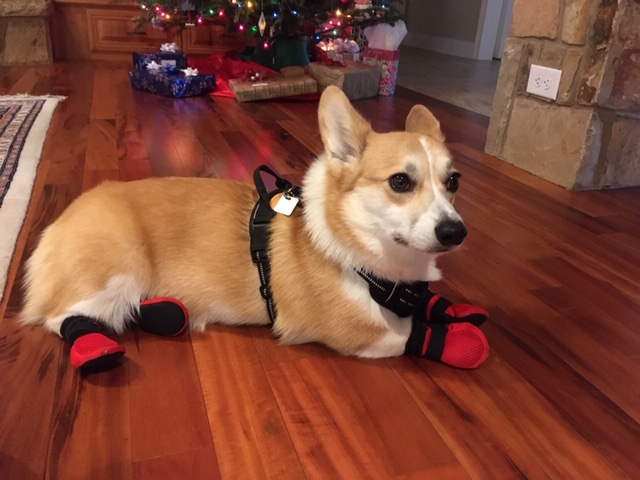
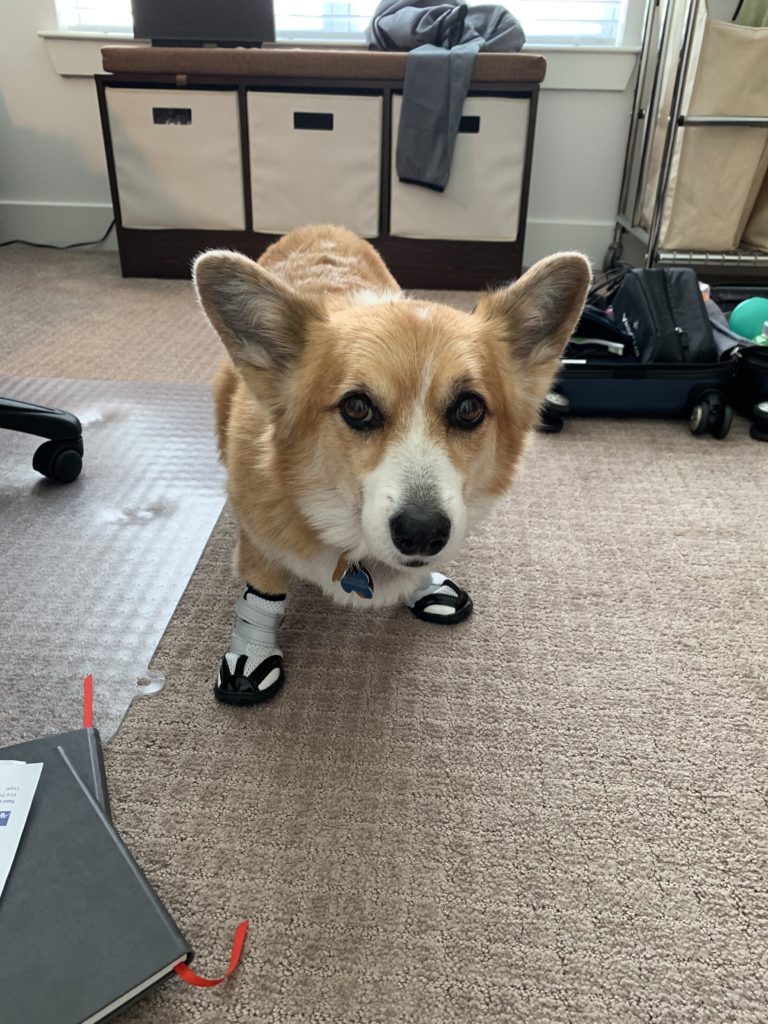
Corgis often need dog boots or shoes for traction, paw protection, and injury prevention. Find out everything you need to know about boots for this adorable, smart, and active breed!
Only day 2 and already walking - and running - confidently in Zipz Waterproof Dog Boots.
“He began to walk normally.â€�
- Zaybo the Cardigan Corgi, Cape Cod, Massachusetts
Corgis are small herding dogs with stubby legs and long, sturdy bodies. For many years, Corgis have been the favorite dog breed for Queen Elizabeth. During her tenure as Queen, she has had more than 30 Corgi dogs, a true testament of her love for this breed of dog. They’ve actually been around since about 1705 AD and got their origin in Pembrokeshire, Wales, where they were used as cattle herding dogs. Originally, there were both the Pembroke Welsh Corgi and the Cardigan Welsh Corgi. Corgis are one of the smallest of the herding group of dogs. Corgis are very confident and intelligent dogs that stand proud as though they believe themselves to be taller than they are. In Stanley Coren’s The Intelligence of Dogs, Corgis were ranked 11th. In 2015, the AKC ranked the Pembroke Welsh Corgis as the 20th most popular dog breed. In addition to being great working dogs, their happy and playful personalities make them wonderful family pets. Corgis are small dogs who are happy, loyal and intelligent dogs despite their tendency to be stubborn at times.
The life span of the Corgis is usually 12–15 years. Their height can be anywhere from 10–12 inches. Their weight can vary from 24 to 31 pounds. The Pembroke Welsh Corgis are slightly shorter than the Cardigan Welsh Corgi and have smaller ears. When we hear the name Corgi today, it’s generally referring to the Pembroke Welsh Corgis. Corgis come in the following colors: black and tan, fawn, sable, red or black and white. Their head is similar in appearance and shape to a fox. Their erect ears, which are in perfect proportion to their triangular head, give them an alert and intelligent look. They have slightly lighter markings on each side of the withers, which gives them an appearance of having a saddle. They have very long coats of hair and are heavy shedders. Since Corgis are indoor dogs, you can expect to find some amount of hair around the house almost daily. Twice a year, usually in the spring and fall, they “blow their coatâ€�. During this period, they’ll need to be brushed thoroughly and consistently for a couple of days.
Corgis have a relatively pleasant personality and temperament. Despite their small size, they are very self-assured confident dogs. Many owners have stated that they have the confidence often found with large dog breeds. They’re loyal family members who love to have fun, play and get into mischief. Despite their fierce independence, their intelligence makes them very easy to train. But, they do tend to have a mind of their own at times. They love learning new things and often do very good in agility and other dog competitions. They are protective, very alert dogs that make excellent watchdogs. They love to bark! As herding dogs, they often try to nip at the ankles of guests or children. This can usually be eliminated with good training early in life. Corgis are not a dog for people who are not active because they are high-energy dogs. You don’t need to be running nonstop to own a Corgi, but they do need at least a good walk or playtime every day. They’re adaptable to almost any environment. With a little training and adequate attention, Corgis can make wonderful companion dogs and pets.
While some health conditions may occur due to their breed, other health issues may arise due to their dwarf-like build. Some health issues Corgis are prone to develop include degenerative myelopathy, Von Willebrand’s disease, monochidism, intervertebral disc disease, progressive retinal atrophy, and hip dysplasia. Some of these issues may be avoided through genetic testing by breeders.
Hip dysplasia is an inherited condition in which the thigh bone does not fit properly into the hip joint, potentially causing discomfort or difficulty walking. Degenerative Myelopathy (DM) is a progressive spinal cord disease that causes rear leg weakness and can lead to paralysis. Intervertebral disk disease may cause unsteadiness, difficulty jumping, or refusal to climb stairs. In these situations, dog boots can help protect paws from dragging and provide comfort, letting Corgis stay active and mobile.
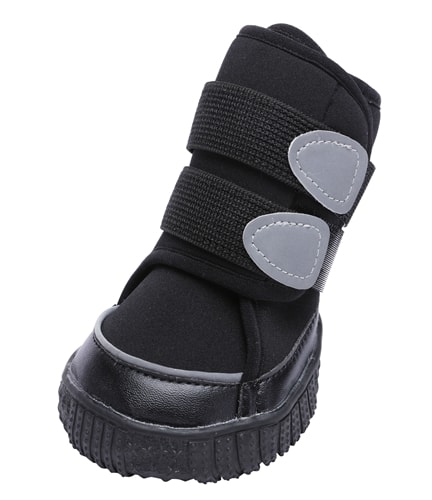


Winston "The Corgi" wanted to thank us for helping him last winter find two great pairs of dog boots for Pembroke Welsh Corgis. It gets bitterly cold in the Northeast, but Winston is warm, dry, and happy on every walk!
Here's what Winston's owner said:
See Winston's picture above. We spread the word to our other Corgi friends so hopefully they'll be calling soon!
Here is a look at some of our Corgi dog customers in Alldogboots' products.