
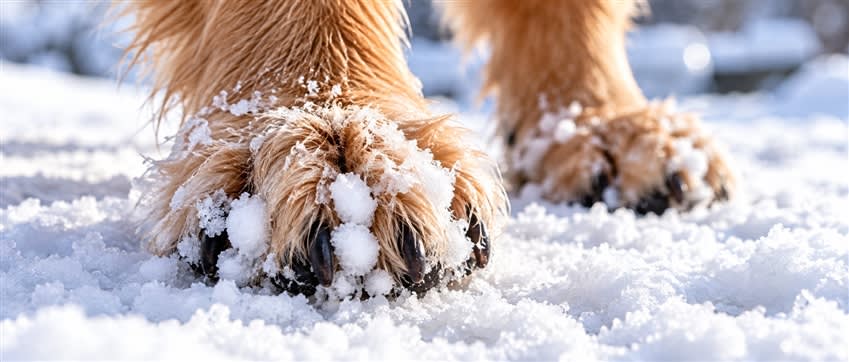
Snow can cling to the fur around a dog’s paws and gradually pack into firm little balls between the toes. What starts as soft snow can become uncomfortable as it freezes, pulls on the fur, or presses against the paw during a walk.
Snow tends to stick to damp fur. As your dog walks, body heat can partially melt the snow around the paws. More snow then sticks to that moisture and becomes compressed with each step.
Dogs with longer fur around the feet may collect more snow simply because there is more surface area for it to cling to. Wet snow can also create buildup faster than very dry powder.
A dog that suddenly starts holding up one paw may have packed snow or ice between the toes.
If your dog was moving normally and suddenly stops, check the paws before assuming they simply want to go home.
Dogs may try to remove uncomfortable snow or ice themselves by licking or chewing around the toes.
Shorter steps, an awkward gait, or reluctance to place a paw down can be a sign that something is trapped around the foot.
On longer snowy outings, stop occasionally and inspect between the toes and around the paw pads. Small clumps can often be brushed away before they become firmly packed.
Long fur around the feet can collect snow. For dogs that regularly develop snowballs, keeping excess fur around the paw pads neatly trimmed may reduce the amount of snow that sticks.
Avoid cutting too close to the skin, and if you are unsure how much to trim, ask your groomer or veterinarian for guidance.
Boots can reduce direct contact between the paw and snow, which can help limit buildup around the toes during winter walks. If your dog regularly walks through snow, browse our Dog Snow Boots.
The boot needs to fit securely. If it twists or slips down, snow may still work its way inside.
Remove wet snow and moisture when your dog comes indoors. Dry between the toes and around the pads rather than only wiping the top of the paw.
If snowballs reform quickly even after you remove them, the snow conditions may simply be working against you that day. A shorter walk can be more comfortable than repeatedly stopping to clear the paws.
Yes. If a boot is too loose, snow can sometimes enter around the opening. This is one reason fit and closure placement matter so much in winter.
After a long snowy walk, remove the boots and check the paws rather than assuming the feet stayed completely dry and clear.
Mild temporary redness can happen after exposure to snow, ice or rough winter surfaces, but persistent redness, swelling, bleeding or continued limping should be taken more seriously.
If your dog remains uncomfortable after the paw is cleaned and warmed, contact your veterinarian for advice.
No. Some dogs rarely develop buildup, especially during short outings or in dry, powdery snow. Others collect snow between the toes very quickly.
Whether boots are useful depends on the snow conditions, the dog’s paw fur, sensitivity and how long the dog will be outside. For a broader overview, read Do Dogs Need Boots in the Snow?
A secure boot can help keep snow away from the paw during winter outings. Choose a style that fits snugly without restricting normal movement.
Snow can stick to damp fur, partially melt from body heat and then collect more snow as the dog continues walking. The buildup becomes more compact with repeated steps.
Avoid pulling hard on frozen clumps. If they do not brush away easily, bring your dog inside and soften the ice gently with lukewarm water before removing it.
Keeping excessive fur around the paw pads tidy may reduce the amount of snow that can collect, especially in dogs with long hair around the feet.
Properly fitted boots can reduce direct exposure to snow and therefore help limit buildup, although snow can still enter a boot if the fit is loose or the opening does not stay secure.
