
Pavement, asphalt, concrete, artificial turf, and sand can become very hot during summer weather. When dogs walk on heated surfaces, sensitive paw pads can become irritated or injured.
This guide explains how to check walking surfaces, recognize signs that your dog may be uncomfortable, choose protective footwear, and help keep paws safer during warm-weather walks.
Pavement and other outdoor surfaces absorb heat from the sun and can become much hotter than the surrounding air. Asphalt, concrete, driveways, patios, artificial turf, and beach sand may all become uncomfortable for bare paws during warm weather.
Paw pads are durable, but they are not immune to heat or abrasion. Repeated exposure to very hot ground can contribute to irritation, tenderness, cracking, or more serious paw damage.
Check the surface before heading out: Place the back of your hand on the pavement for several seconds. If you cannot comfortably keep your hand there, the surface may also be too hot for your dog’s unprotected paws.
Checking the actual walking surface is more useful than relying only on the air temperature because different surfaces absorb and retain heat differently.
Watch your dog during warm-weather walks. Behavior can give you an early clue that a surface is uncomfortable.
If your dog appears uncomfortable, move to a cooler surface and check the paws before continuing the walk.
Protective dog boots create a barrier between the paw pads and heated ground. For summer walking, look for footwear that provides enough sole protection without being unnecessarily heavy or bulky.
Helpful features include:
If your dog regularly walks on hot sidewalks, asphalt, driveways, or other heated surfaces, browse our collection of protective footwear specifically selected for hot pavement.
Shop Dog Boots for Hot PavementProper fit is one of the most important factors in keeping dog boots from twisting, slipping, or falling off. Measure your dog’s paw while the dog is standing and putting weight on it.
Boots that are too loose may rotate or slide off, while boots that are too tight may cause rubbing or discomfort. Always compare your dog’s measurements with the size chart for the specific style.
For additional sizing help, see our Dog Boot Fit Guide.
Different dogs prefer different levels of coverage and flexibility. These are examples of lighter footwear styles that may work well for warm-weather use.
A lightweight, flexible option for dogs that prefer a softer style during warm-weather walks.
An open-style option for larger dogs that need a sturdy sole with additional airflow.
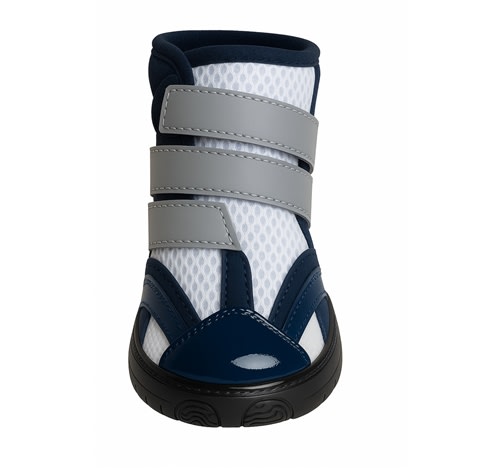
A supportive option with a protective sole for dogs that need additional cushioning or grip.
Place the back of your hand on the pavement for several seconds. If you cannot comfortably keep it there, the surface may also be too hot for unprotected paws.
Protective dog boots create a barrier between the paw pads and heated ground. Look for a secure fit and a sole suitable for outdoor walking.
Not every dog needs boots for every outing. The need depends on the walking surface, temperature, activity, and the individual dog’s paws.
Measure the paw while your dog is standing, use the product-specific size chart, and secure the closures so the boot stays in place without being too tight.
Need protective footwear for hot sidewalks, asphalt, driveways, and other heated surfaces?
Shop Dog Boots for Hot Pavement


